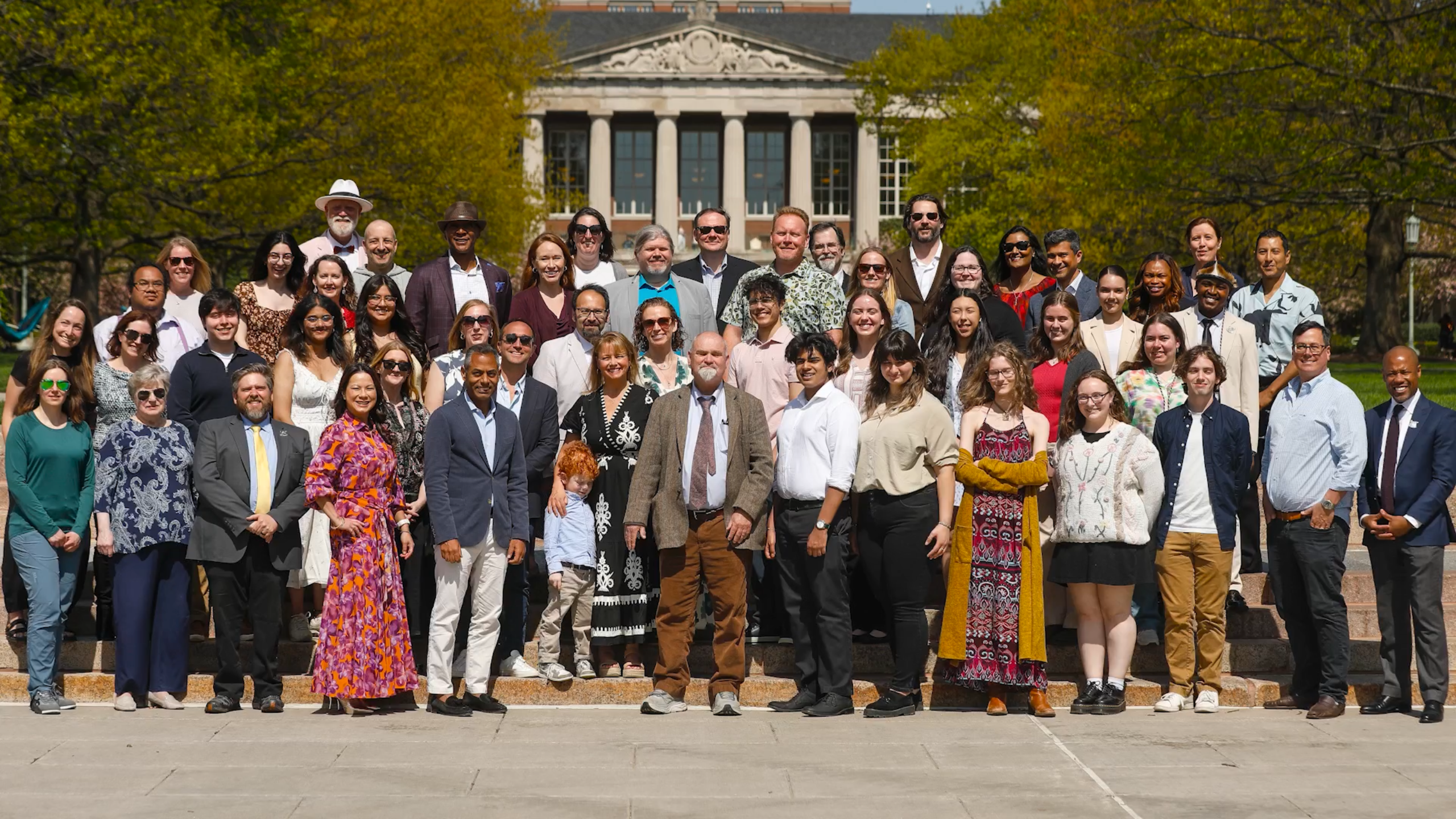
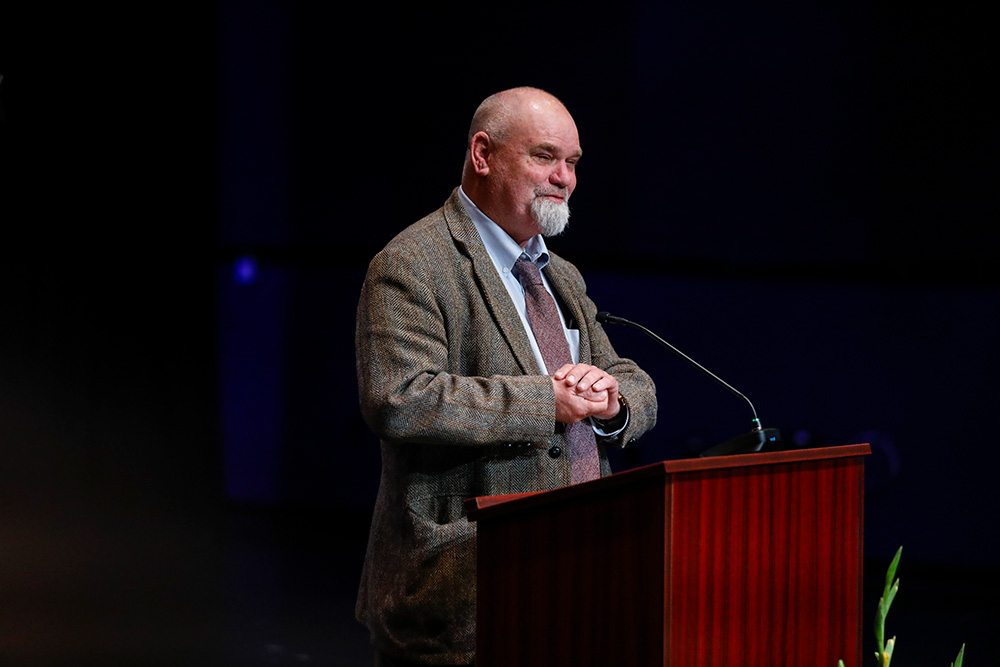
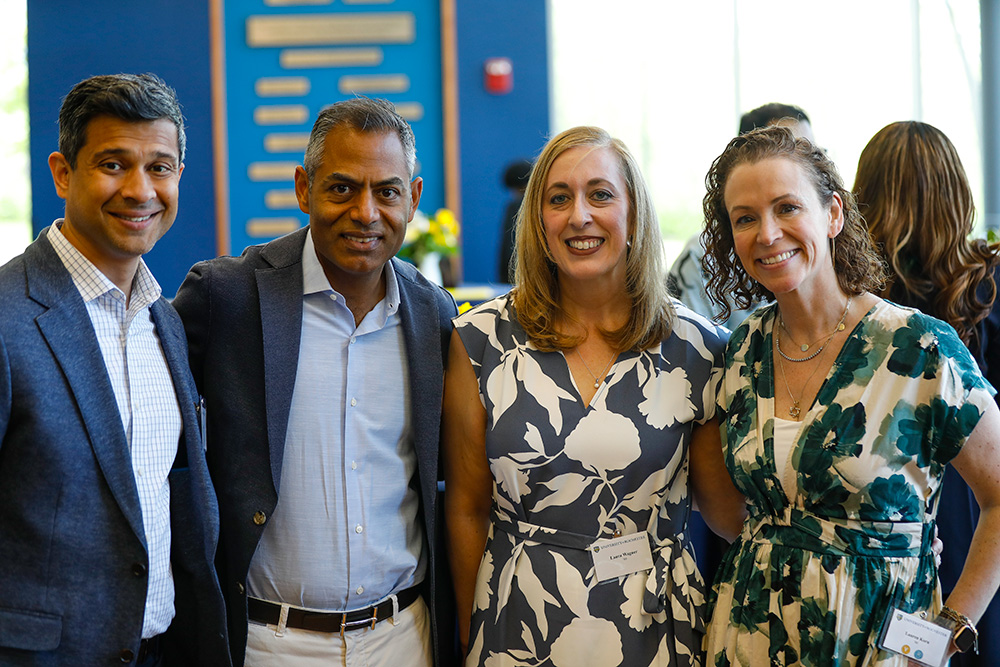
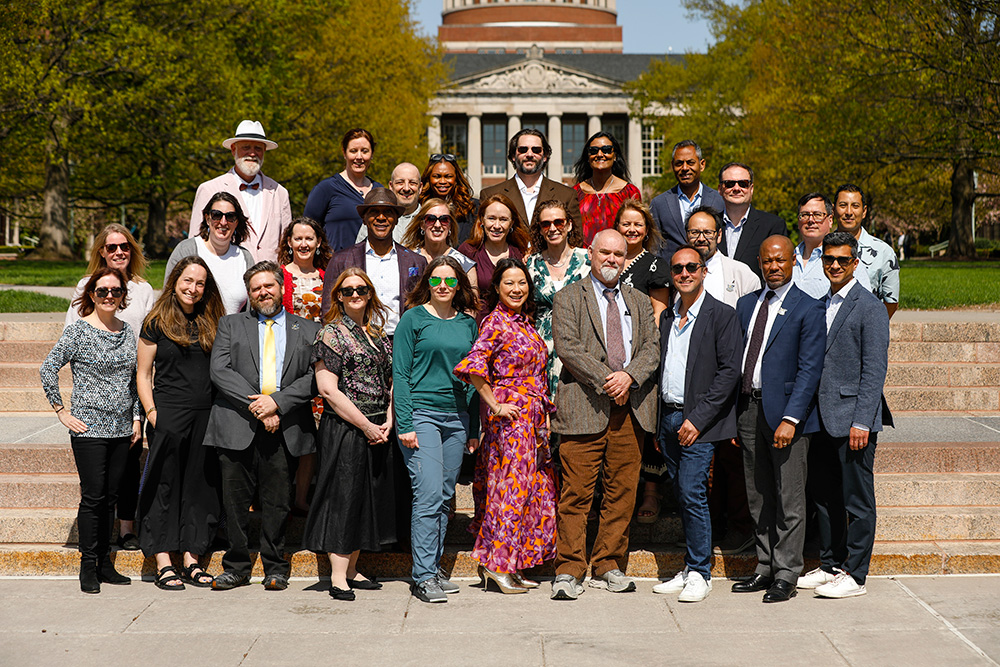
I am thrilled to have been able to contribute to the commemoration of an individual as legendary as Samuel Nelson. Sam is a renowned English professor and debate coach who profoundly enriched the academic institutions of University of Vermont, University of Cornell, and notably, the University of Rochester. As an example of his accomplishments, in 1998, Sam and his colleagues at the University of Rochester hosted one of the biggest debate tournaments in the world: the Cross Examination Debate Association (CEDA) National Championship. In order to ensure that the event ran smoothly, the University canceled its Friday classes on March 20th, 1998. In addition, after many years of exceptional contributions to teaching and coaching at the University, Sam was recognized with the esteemed Goergon Award in 2005.
However, one of Sam’s greatest accomplishments was founding the University of Rochester’s Speech and Debate team and leading it to great heights. Starting as just a handful of unorganized students in 1992, Sam slowly pieced together an unstoppable force of persuasive passion and prestige. In 1997, Rochester received their first-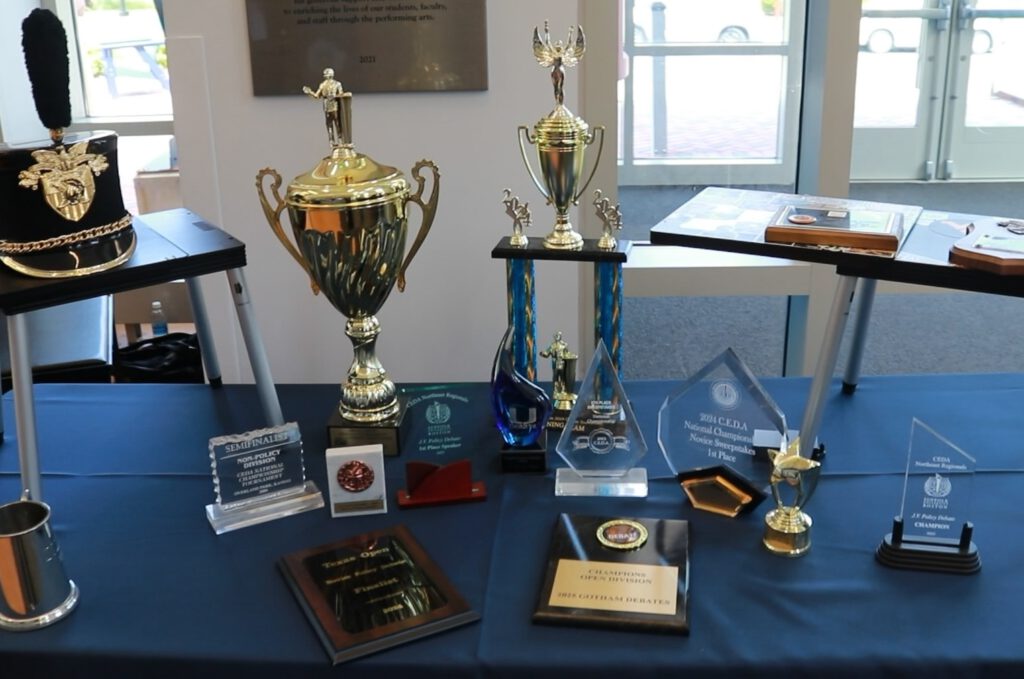 ever Top-10 national ranking at ninth place in the CEDA championship. The 2001-2002 debate season was hailed as Rochester’s “Best Year Ever”: the team achieved a 4th place ranking in the National Debate Tournament (NDT) in 2001, and a #1 victory in the nation for both the NDT and CEDA championships in 2002. In the following years until 2007, Rochester continued to boast excellence in national championships, in addition to receiving recognition for having the best policies for novice students and having the largest-member team in the nation.
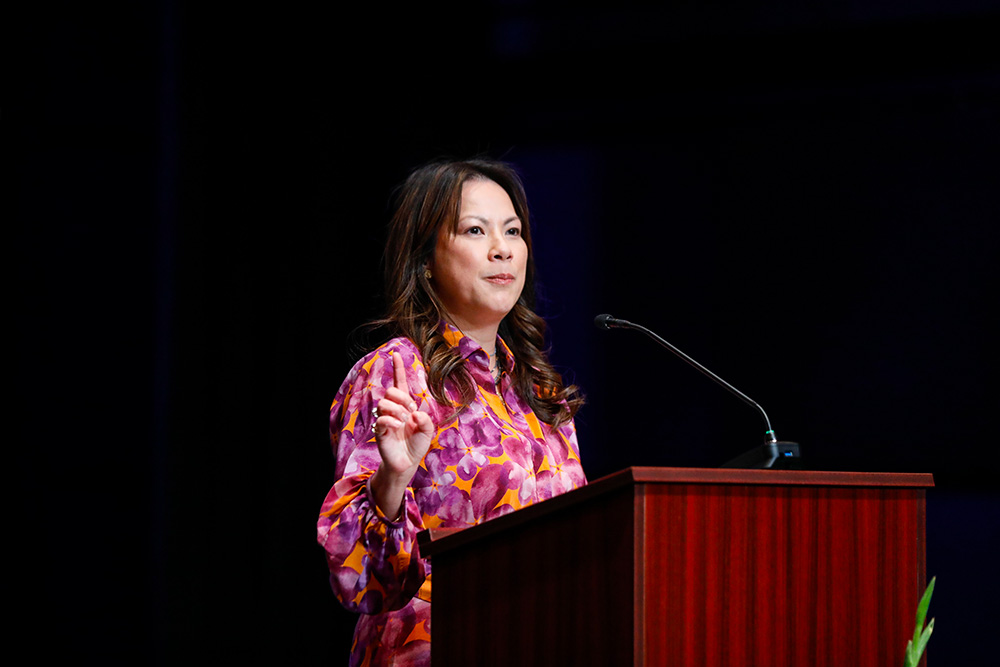
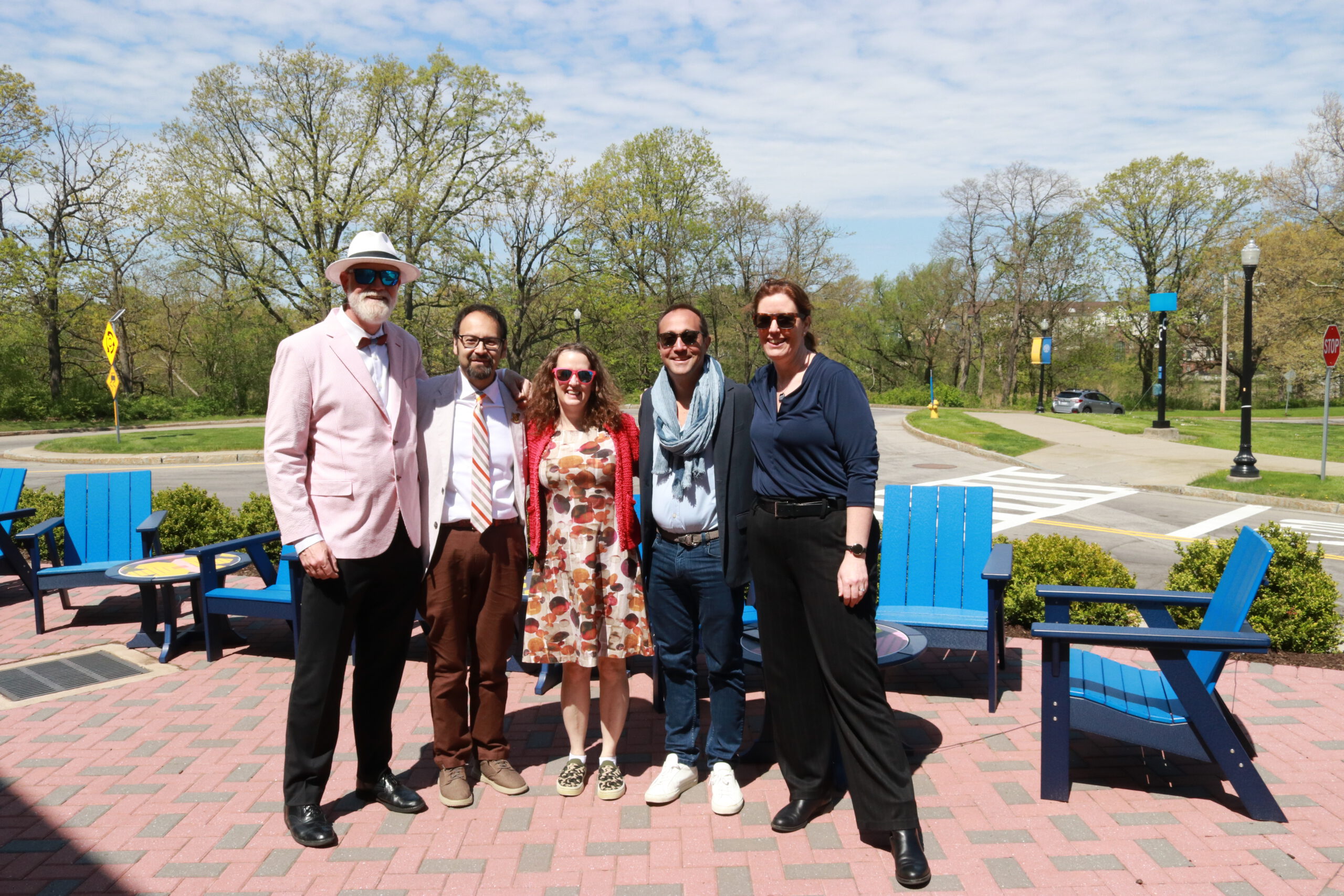
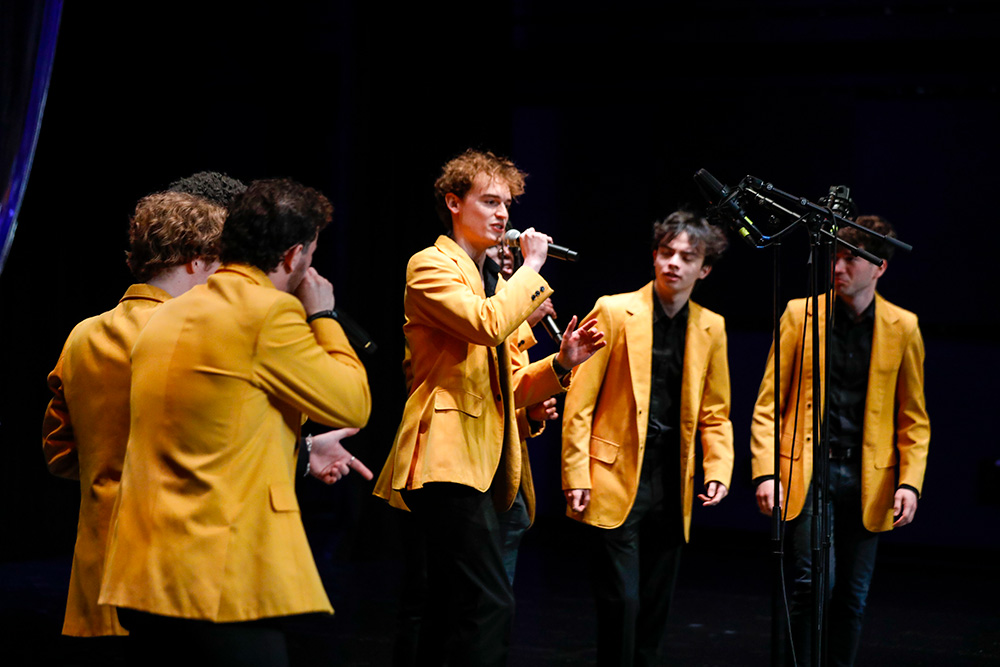
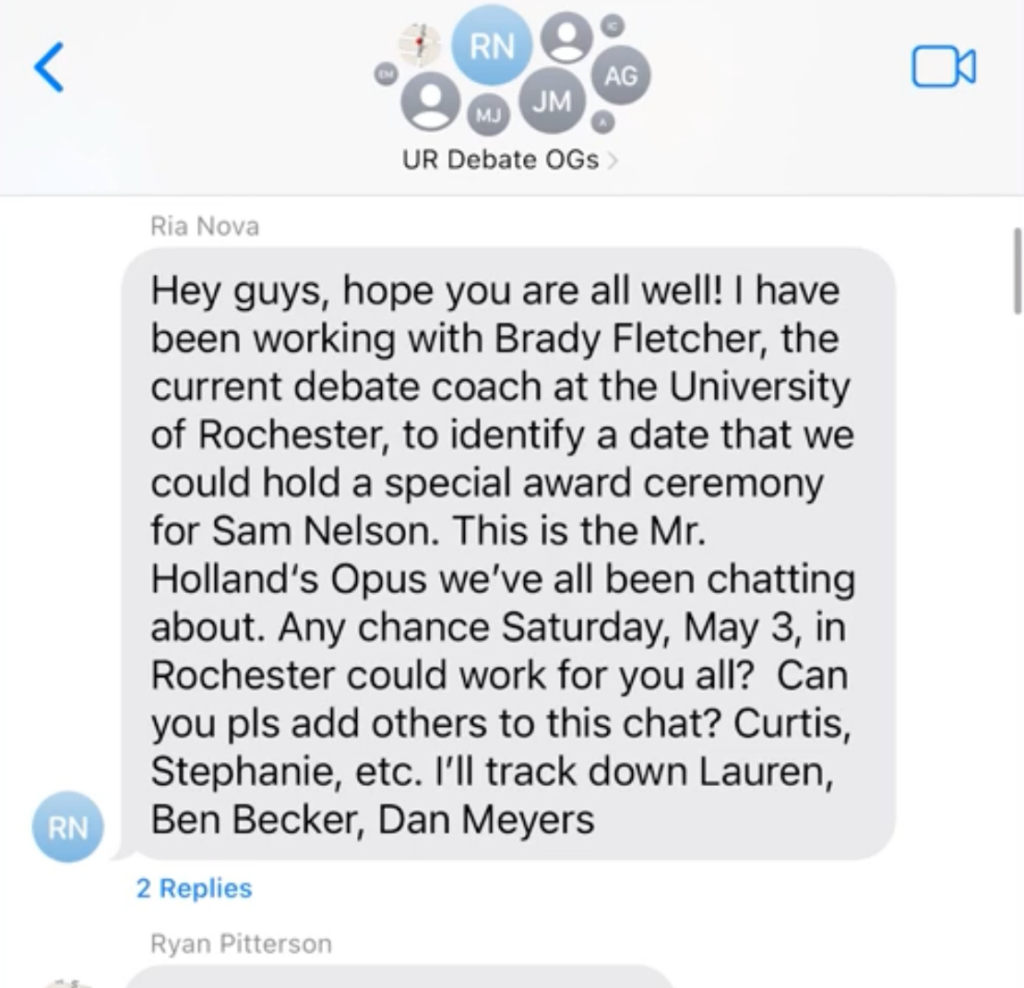 As the 50th anniversary of Speech and Debate at the University of Rochester approached, a handful of Sam’s former debaters, led by former All-American in the CEDA, Ria Nova, had the idea to celebrate Sam and the University of Rochester’s legacy with a grand award ceremony. By coordinating with the group and working with the University, Ria was able to schedule the event for May 10th, 2025 in Sloan Auditorium. Former and current Speech and Debate members of all ages were invited to bask in the program’s glory through an evening of speeches, a performance by the Yellow Jackets a capella group, and the bestowal of a Gamechanger Award to Sam.
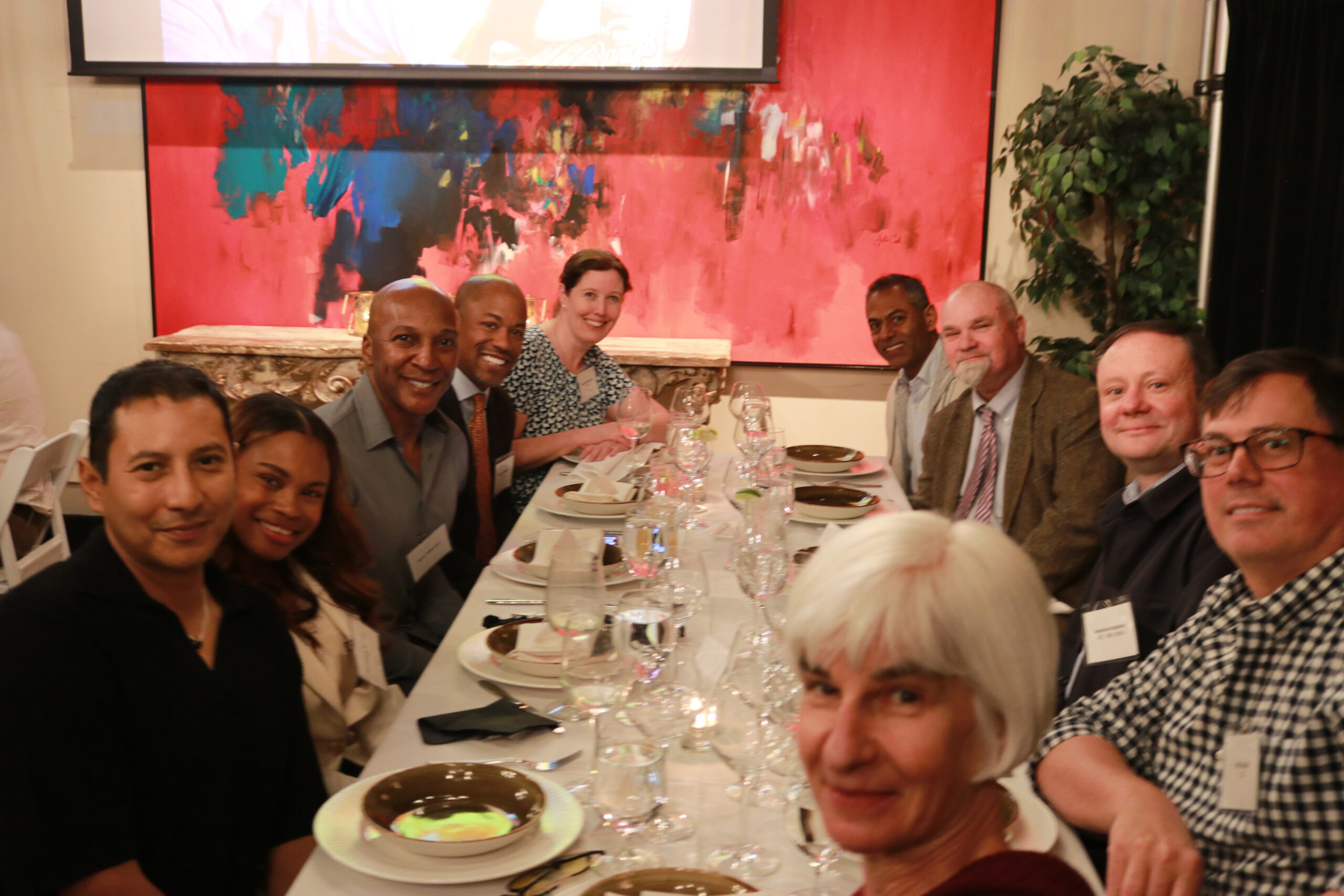
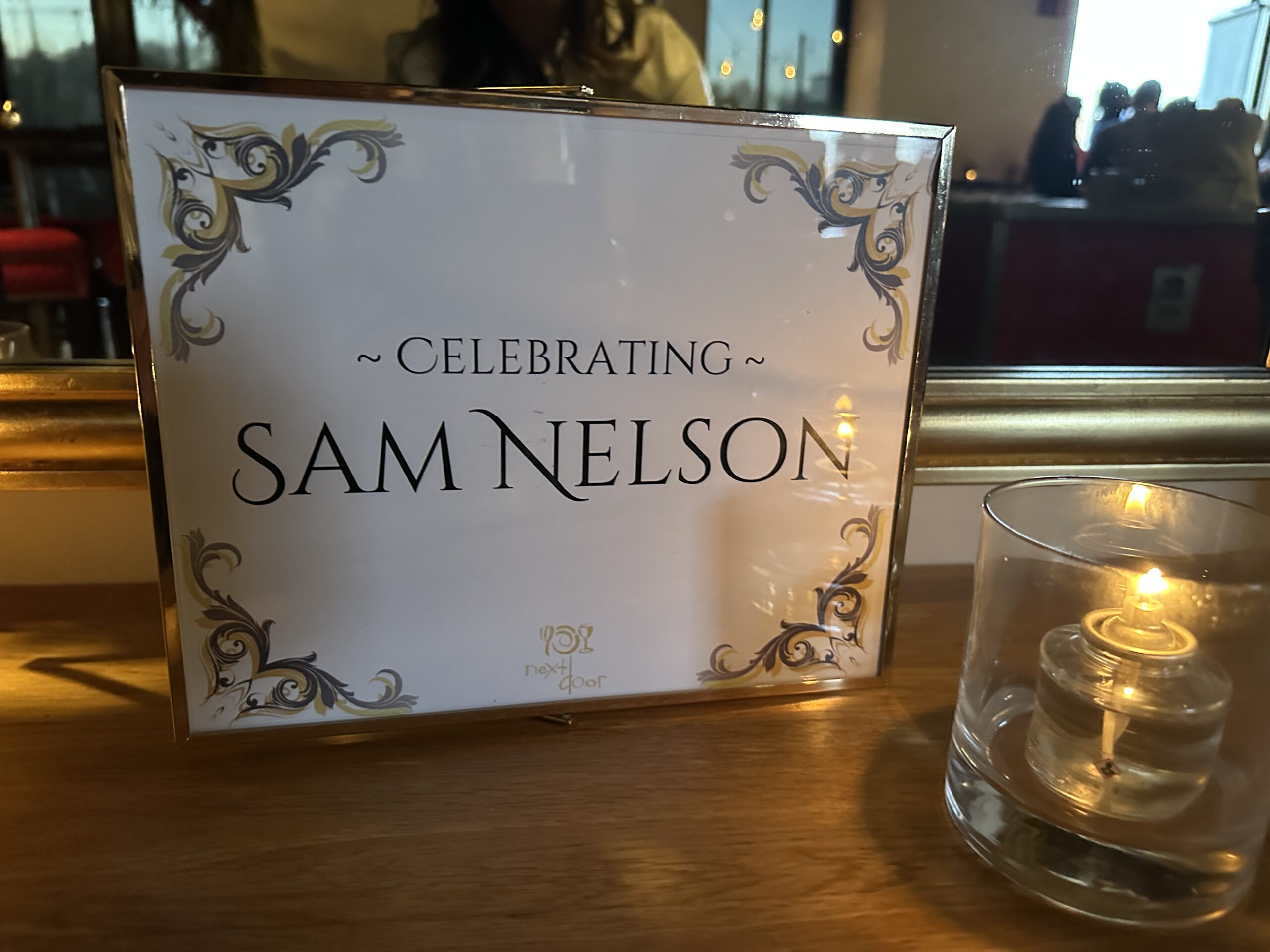
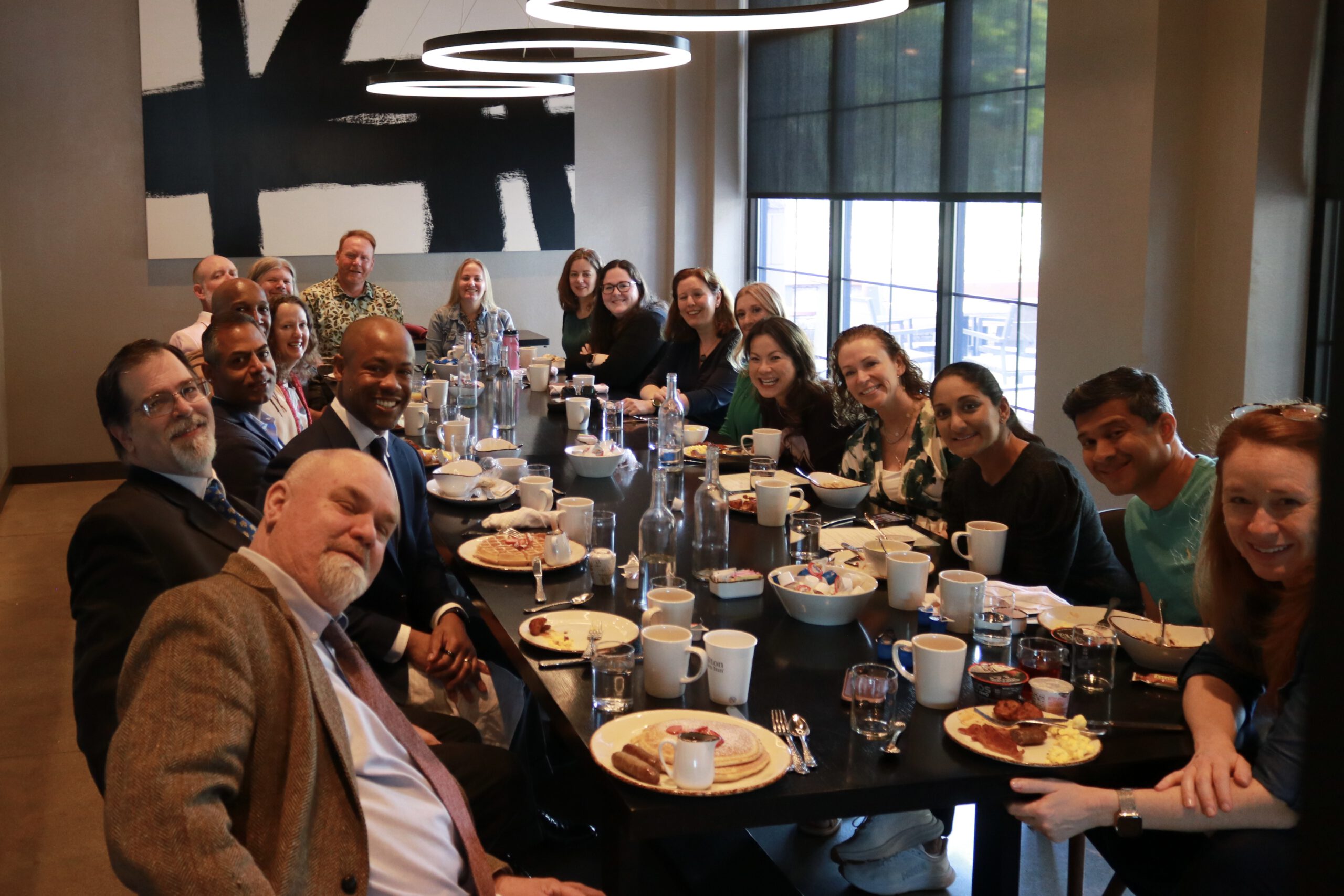
However, as Sam prepared to come to Rochester that weekend, little did he know that the award ceremony was only a fraction of the festivities being planned. On the night before the ceremony, a smaller group of Sam’s closer friends and colleagues would surprise him with a big dinner at Next Door sushi and Japanese restaurant. During the meal, an open microphone would invite the guests to participate in a series of roasts and toasts about Sam, allowing the group to relive their cherished memories of Sam’s influence, appreciate the countless lives he had touched, and pick fun at his quirky character. In addition, on the morning before the ceremony, the group would meet again for a delicious breakfast and additional reminiscing at Grappa Italian Noveau.
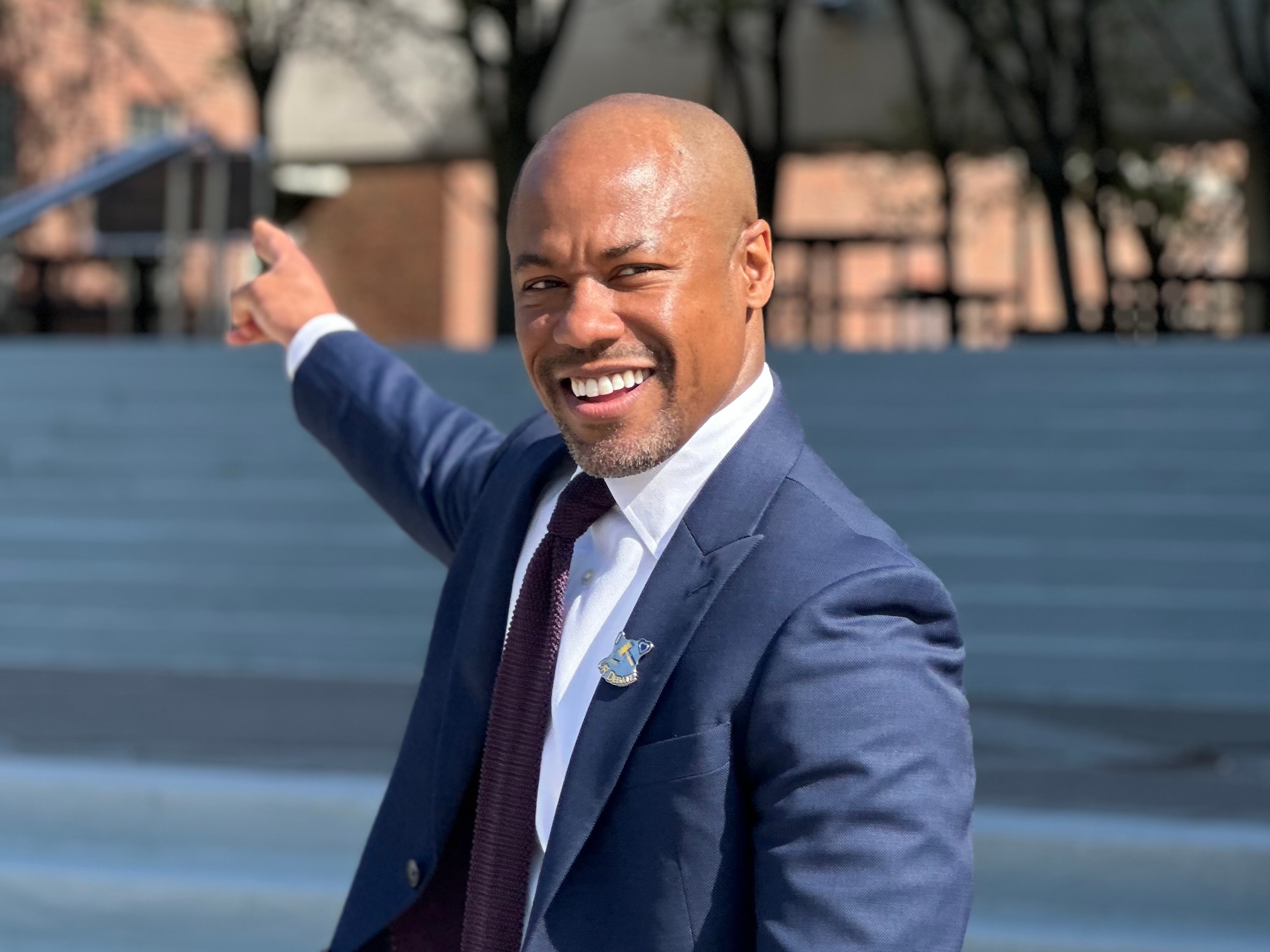
 In the days leading up to the big event, the debaters also had the idea to create a documentary of the proceedings so that they could have a long-lasting keepsake of their gathering. With the event just around the corner, Ria frantically asked her nephew Noah, a current University of Rochester student, and a good friend of mine from the Piggies Ultimate Frisbee team, if he knew anyone who might be able to help, and I was eager to take the opportunity. Hence, Ria and I got connected, and we began to discuss the nature of the event, and how I should best aim to capture the moment. At this point, I also got connected with Sills Cummis & Gross Litigation Department lawyer Ahmed Kassim, who would serve as my main artistic guide. Since Ria was busy organizing the event, she could best serve as more of an executive producer, and she entrusted Ahmed to handle the documentary’s creative direction, from creating the storyboard to overseeing the editing process.
The most important moment was capturing the surprise on Sam’s face when he walked into Next Door restaurant, expecting to be seated at a table with just Ria, but instead being greeted by 50 of his close friends and colleagues, ready to celebrate him. Hence, I both set up a Canon 80D and a tripod that I checked out from the University of Rochester’s Lending Library near the entrance, and I got up close and personal with a hand-held gimbal attached to my phone. For the remainder of the event, I would walk around and film as many special moments as I could—I paid special attention to big hugs, belly laughs, and of course, the roasts and toasts once everyone was seated. For the breakfast and the award ceremony on the following day, I was also hard at work capturing the proceedings and recording as much footage of the weekend as I could to truly commemorate the event.
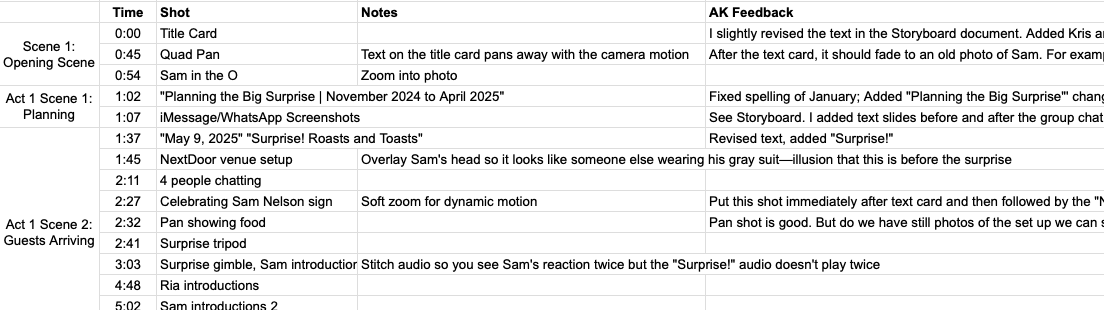
Then, I began the long process of creating the documentary. First, I sorted through all of the content by renaming each file, organizing the files into a directory structure based on content type, and labeling which files were the most exciting and usable. Then, I made a rough cut of the documentary, focused on cutting down the footage to only what was important based on the storyboard that Ahmed created. I had about 4 hours of raw footage, but Ahmed outlined that we should only include about 45 minutes of the roasts and toasts from Next Door, 45 minutes of the award ceremony, and other small sections for an introduction, the breakfast at Grappa, and an outro. After I finished the rough cut and shared it with Ahmed, we scheduled a meeting to discuss what modifications to my selection of the footage should be made and the finer details of how I should add transitions, text, and other effects. After I implemented the notes from the meeting and added the effects, I sent the group a second, more polished version of the documentary for them to review, and we met a final time to discuss the last modifications that should be made. Finally, I sent them the final version of the documentary, and they distributed it to the alumni who couldn’t make it to the event, in addition to publishing it on their website.
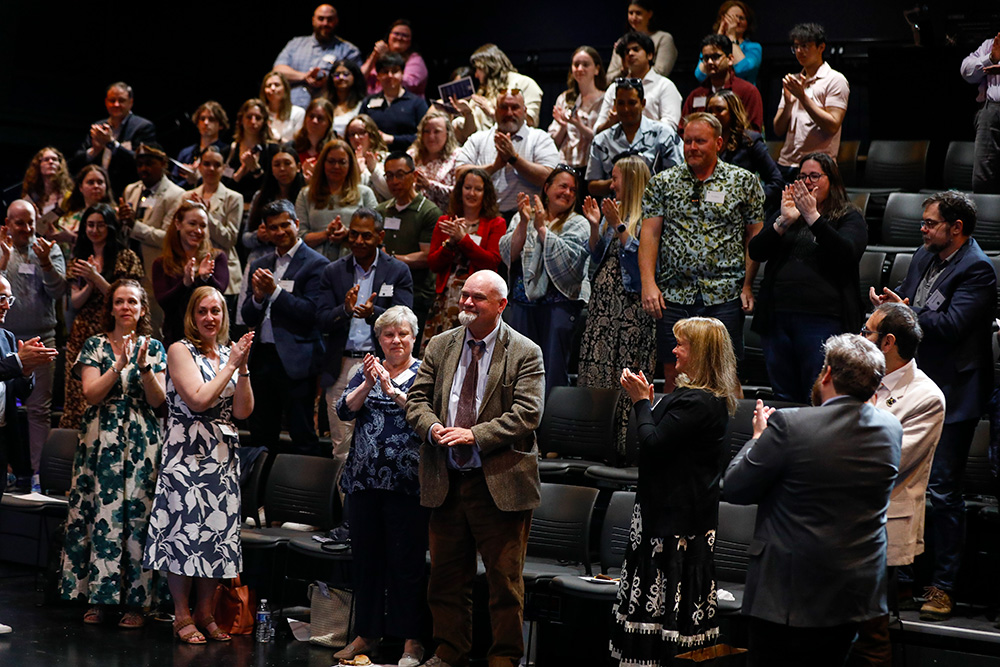
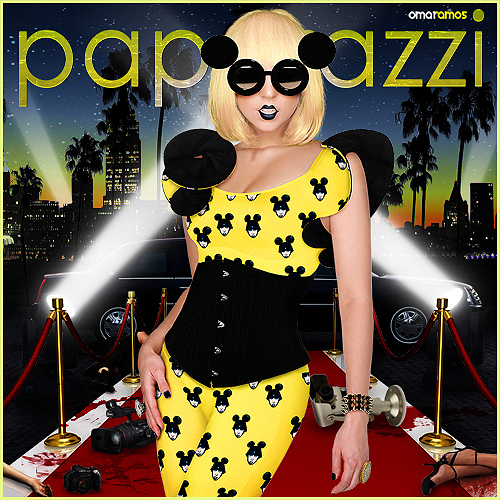 perceived by the general public to be interesting, and it fluctuated drastically throughout the event. At times, I felt like the star of the evening, perceived like the character in Brittney Spears’ song “Paparazzi”—I felt appreciated for my care in the event and my hard work to preserve the debaters’ memories. For example, for the majority of the award ceremony, I was standing on the side filming the speeches from an angle, but when a video introducing the Game Changer Award was coming to an end on the big screen, Ahmed approached me and said to focus on Sam’s reaction when the video finished. I asked him if I could walk across the stage to get a close-up, and he told me that I could. It took a lot of courage, and I probably wouldn’t have been able to do it without Ahmed’s encouragement, but when I walked onstage, everyone in the audience rose for a standing ovation, and I was able to capture a powerful moment of Sam showing his gratitude for everyone’s praise (shown here, 1 hour and 8 minutes into the documentary).
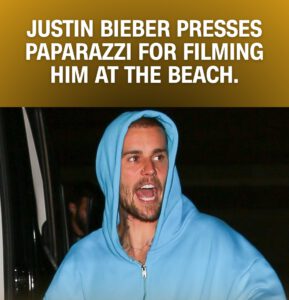 However, at other times, I felt like the intrusive videographers that were provoking Justin Bieber on the beach when he was just trying to have a nice time with his kids on Father’s Day. Ria was always supportive of my efforts to get into the action with my camera, but I could tell that some of the other guests were not as enthusiastic about the documentary, including, at times, Sam. Some people seemed like they were just trying to enjoy their evening without the pressure of being filmed. Ria instructed me to spend a lot of time around Sam, given that he was the star of the evening, but I could tell that he felt annoyed about my presence at times, so I tried my best to remain silent and in the background unless I could participate in the conversation in a truly confident way. Sometimes, if Sam noticed that I was hovering nearby, he would brighten up his face, beckon me over, and ask if I could take a photo of the people he was standing with. In these cases, I would graciously agree, take the photos, but then promptly take the hint that I should go away.
However, regardless of how my public perception changed throughout the event, my overall experience of documenting Sam’s opus was a unique and special time. I’m grateful that I was able to get connected with Ria Nova for the opportunity to witness such a powerful event, and I’m thrilled that I was able to contribute to the commemoration of an individual as legendary as Samuel Nelson.